

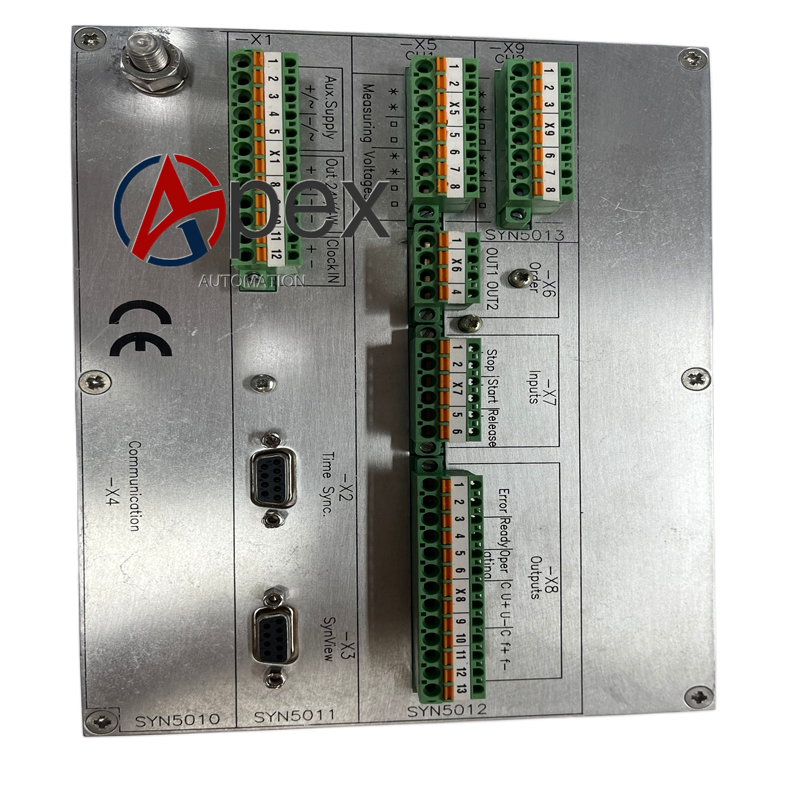
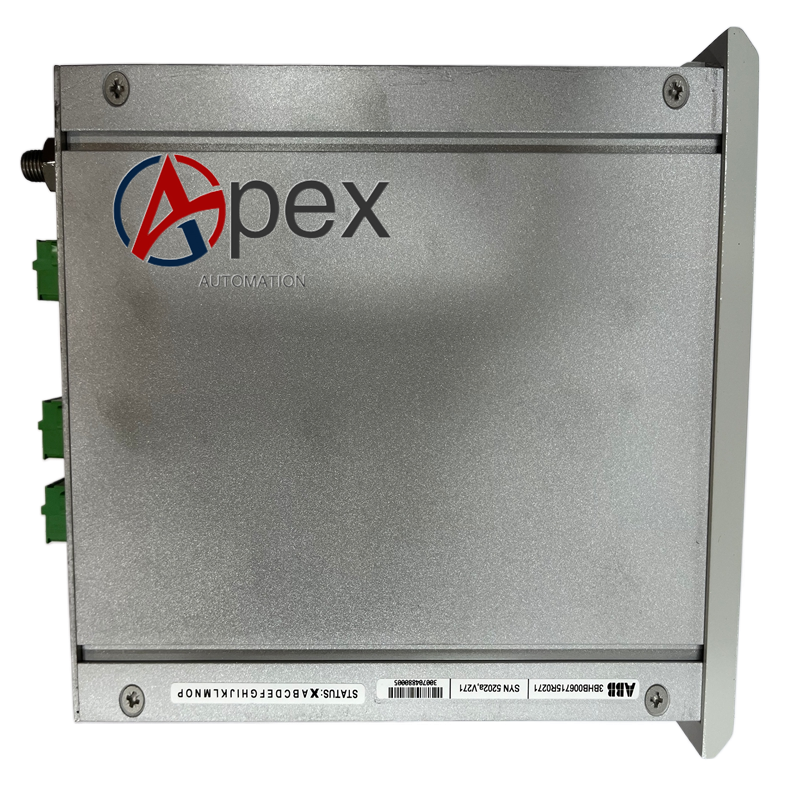

Technical Specifications Rated voltage input 100 V AC. Auxiliary power supply 80‑265 V AC/DC. Typical power consumption 7.5 W. Operating temperature ‑10 ℃ to +55 ℃, storage temperature ‑40 ℃ to +85 ℃, non‑condensing relative humidity 5%‑95%. Module surface IP20. Complies with IEC 60255 power equipment standards.
Functional Features Supports automatic and manual synchronization operation modes. Compares voltage, frequency and phase difference between generator and power grid. Outputs dry‑contact closing control signal. Front‑panel LED indicates synchronization progress and fault status. Built‑in hardware fault self‑diagnosis function.
Application Scenarios Used for generator grid‑connection control of thermal power plant, hydropower station and industrial self‑generation power station. Suitable for project reconstruction and spare‑part replacement.
Performance Parameters Synchronization window parameter can be configured flexibly. Closing signal output possesses stable contact capacity. LED gives clear visual status feedback. Self‑diagnosis can locate signal‑input circuit fault rapidly.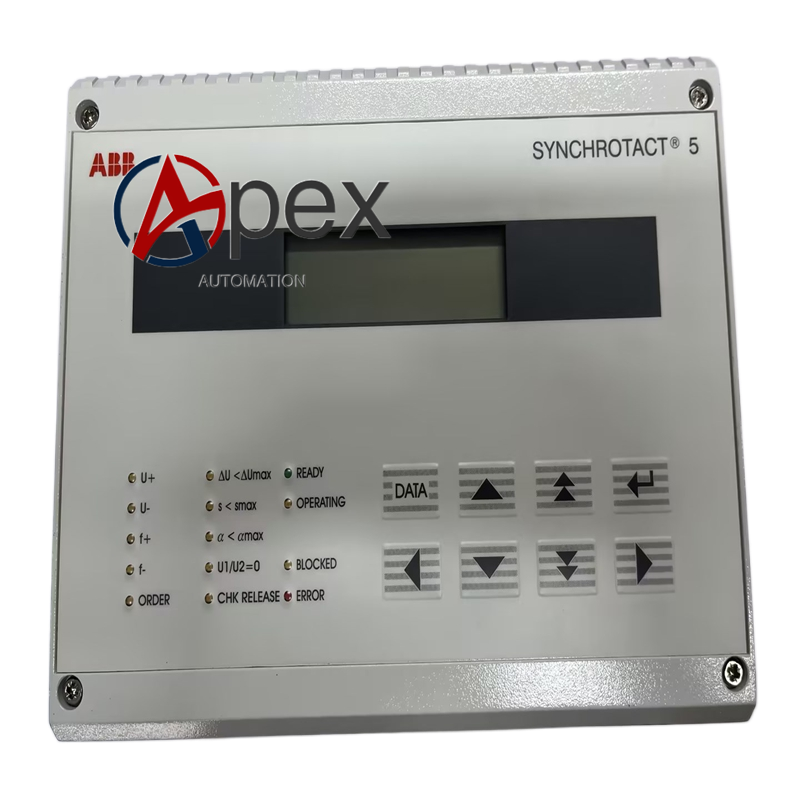
Material Composition Glass‑fiber epoxy printed circuit board. Synchronization processing chip, voltage sampling circuit. Reinforced plastic housing. Screw‑type secondary‑circuit wiring terminals. Metal rack‑mount fixing support.
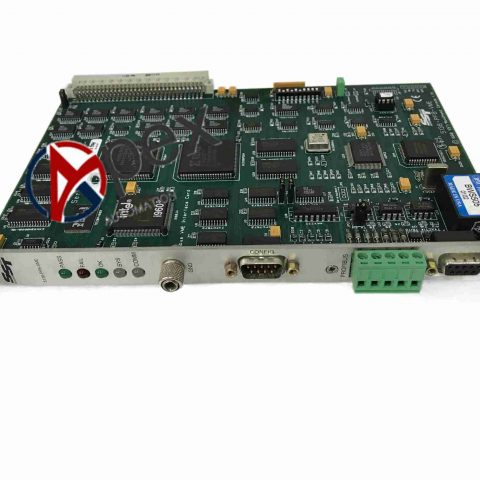
Structural Characteristics Standard rack‑mount module structure. Front‑panel arranged with LED status indicators. Rear side fitted with signal input, power supply and output terminals. Weight approximately 0.75 kilogram.
Working Principle After power‑on, module executes hardware self‑check. It receives generator and busbar PT secondary voltage signal. Internal circuit calculates voltage deviation, frequency deviation and phase angle difference.
Installation Requirements Install module into standard cabinet rack position and tighten fixing screws. Complete PT voltage input, auxiliary power and closing‑loop wiring strictly according to electrical drawing.
Usage Notes PT secondary circuit shall avoid short‑circuit risk. Comply with power safety specifications during commissioning. Adjust synchronization window parameters according to generator unit requirement. Periodically check terminal tightening torque.





There are no reviews yet.