

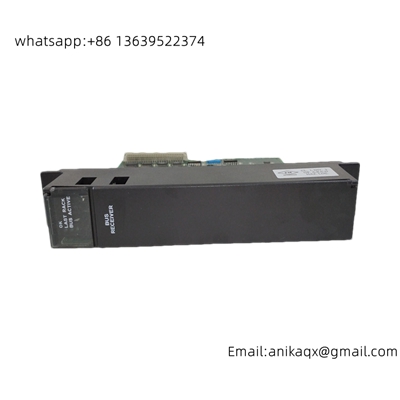

- Communication Interfaces:
- Integrated 10/100 Mbps Ethernet port for high-speed networking and remote access.
- Supports Modbus/TCP server and client functionality, enabling seamless integration with third-party devices.
- Features RS-232 and RS-485 serial ports for connecting to legacy equipment and programming tools.
- Power Requirements:
- Operates on a 5 VDC power supply from the PLC backplane.
- Current consumption ranges from 35 mA to 135 mA, depending on operational mode.
- Environmental Specifications:
- Operating temperature range: 0°C to 55°C (industrial environments).
- Storage temperature range: -20°C to 85°C.
- Humidity tolerance: 20% to 80% non-condensing.
Functional Features
- High-Speed Processing: The 133 MHz processor ensures rapid execution of Boolean and non-Boolean operations, enabling real-time response to sensor inputs and control commands.
- Scalable I/O Configuration: Supports a large number of discrete and analog I/O points, allowing for flexible system expansion as process requirements evolve.
- Robust Communication Capabilities: Built-in Ethernet and serial ports facilitate integration with HMI panels, SCADA systems, and other PLCs, enabling centralized monitoring and control.
- Enhanced Diagnostics: LED indicators provide real-time status feedback on power, CPU health, communication activity, and I/O faults, simplifying troubleshooting and maintenance.
- Hot-Swappable Design: The module can be installed or replaced without powering down the PLC rack, minimizing downtime during system upgrades or repairs.
- Redundancy Support: Compatible with hot standby redundancy configurations, ensuring continuous operation in mission-critical applications.
Application Scenarios
- Manufacturing Automation: Controls robotic systems, conveyor belts, and packaging machinery in automotive and electronics assembly lines, optimizing production efficiency and product quality.
- Energy Management: Monitors and controls power generation and distribution equipment in utility plants, enabling real-time optimization of energy consumption and grid stability.
- Water Treatment: Regulates pumps, valves, and chemical dosing systems in municipal water treatment facilities, ensuring compliance with environmental standards and efficient resource utilization.
- Oil and Gas: Manages pipeline monitoring and control systems, enabling safe and efficient transportation of hydrocarbons while minimizing environmental impact.
- Transportation: Controls signaling devices and traffic management systems in rail networks and urban infrastructure, enhancing safety and reducing congestion.
- Building Automation: Optimizes HVAC, lighting, and security systems in commercial buildings, improving energy efficiency and occupant comfort.


There are no reviews yet.