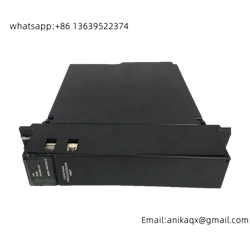
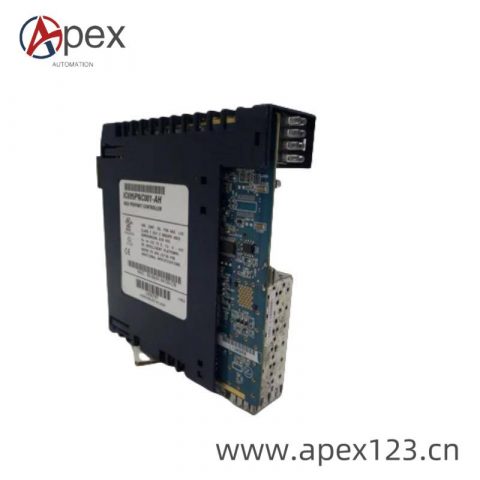
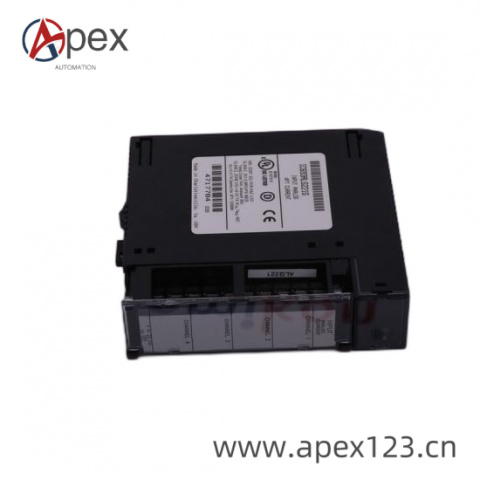
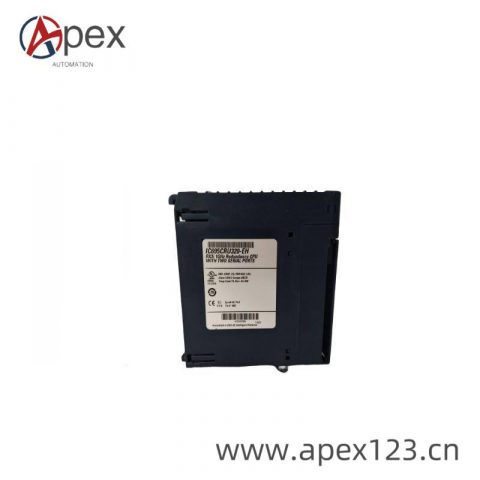
GE IC695CMM002-BF
- Serial Ports: Two independent and isolated serial ports, with RJ45 interface.
- Port Type: RS - 232 or RS - 485/422. RS - 485/422 can be operated in 4 - wire (full - duplex) or 2 - wire (half - duplex) mode.
- Data Bits: 7 or 8.
- Stop Bits: 1 or 2.
- Parity Options: Even, odd, none.
- Baud Rates: 1200, 2400, 4800, 9600, 19.2k, 38.4k, 57.6k, 115.2k bps.
- Backplane Power Requirements: 0.7 amps maximum @ 3.3 VDC, 0.115 amps maximum @ 5.0 VDC.
- Operating Temperature: 0 °C to + 60 °C.
- Input Impedance: RS - 485/422: Zin > 96 kΩ; RS - 232: 3 kΩ < Zin < 7 kΩ.
- Isolation: Port to backplane and frame ground: 250VAC continuous, 1500 VAC for 1 minute, 2550 VDC for 1 second; Port to port: 500VDC continuous, 710 VDC for 1 minute.
Tag:
wechatPhone +8613639522374
Phone: +8613639522374
Email: anikaqx@gmail.com
connect:Anika
- Independent Serial Ports: The two serial ports are independent of each other, which can be configured and used separately, providing more flexible communication options.
- Rich Communication Protocols: Each serial port can be configured for Modbus master, Modbus slave, serial I/O protocol, DNP3 slave, DNP3 master, and CCM slave operation. It supports serial read/write and Modbus master/slave protocols.
- Flexible Configuration: The serial ports can be configured as RS – 232 or RS – 485/422 through software, and the flow control can be configured to be full – duplex or half – duplex (with firmware version 1.32 or later). It also supports RTS/CTS hardware handshake and RFR/CTS handshake for RS – 232 communication.
- Hot Swap Capability: It has the hot – swap function, which allows the module to be inserted or removed from the backplane without powering off the system, improving the maintainability and reliability of the system.
- Advanced Diagnostics: It is equipped with LED indicators to display the module status, port fault, and port status, which is convenient for users to monitor and troubleshoot the module operation.
- Industrial Automation: In industrial production lines, it can be used to connect PLCs with various field devices, such as sensors, actuators, and inverters, to realize data transmission and control. For example, in a food processing production line, it can be used to connect the PLC with temperature sensors and flow meters to monitor and control the production process.
- Process Control: In the chemical, power, and other process industries, it can be used to connect different control systems and field devices. For instance, in a power plant, it can be used to connect the PLC with intelligent electronic devices (IEDs) to realize the communication and data exchange of power system parameters.
- Building Automation: It can be used in building automation systems to connect building management systems (BMS) with various sub – systems, such as HVAC systems, lighting systems, and security systems, to achieve centralized management and control of the building.
Product has been added to your cart





There are no reviews yet.